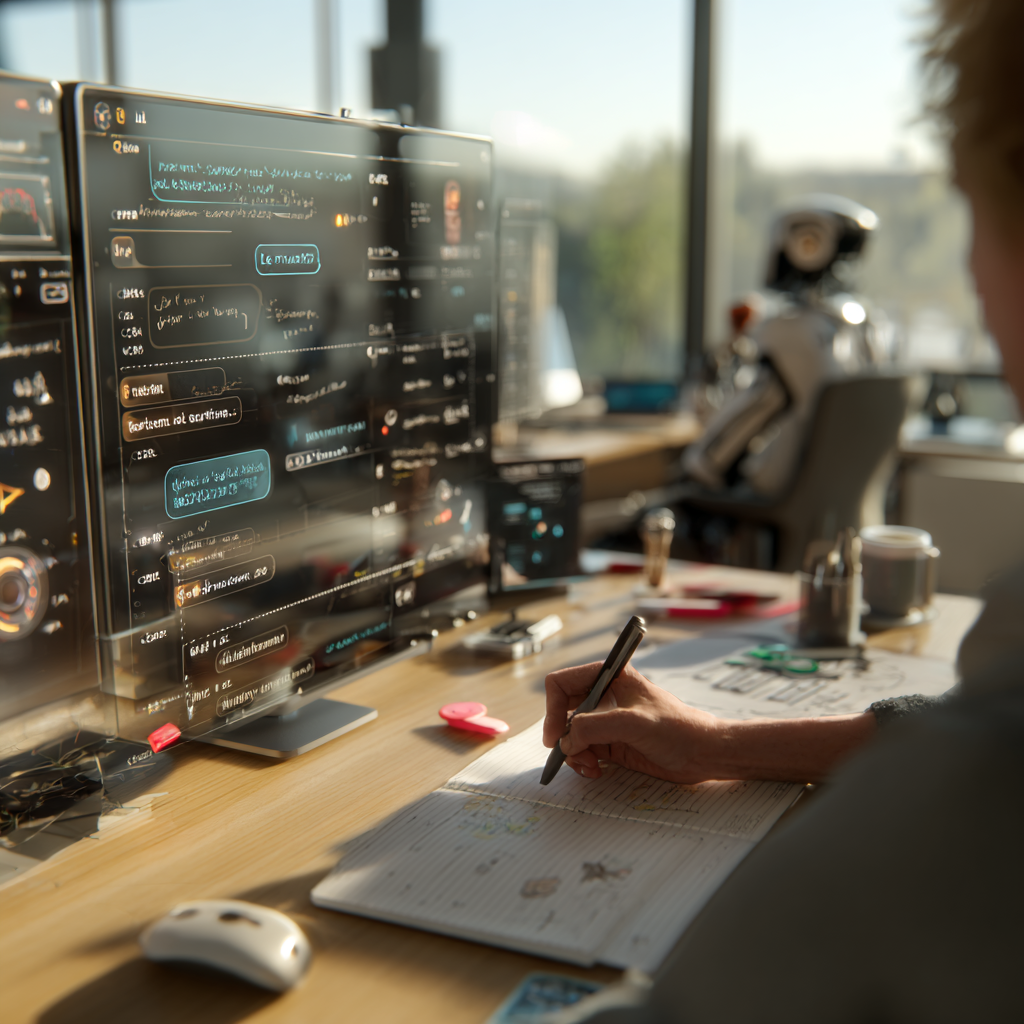


In the analytics class I teach at Wake Forest University, recent discussions turned to a pressing concern for soon-to-be graduates: how artificial intelligence is transforming, and in some cases eliminating, entry-level job opportunities. With the accelerating adoption of generative AI tools across industries, what was once a reliable first step into the workforce is now increasingly uncertain. Students are asking the difficult question: Will AI close the door on entry-level roles, or can new graduates find ways to thrive alongside these powerful technologies?
History has taught us that radical new technology has often been confronted with a bit of curiosity and a lot of anxiety. The anxiety is driven by the fear of the unknown. We fear the things we do not understand. For example, in the early 20th century, there was a fear of automobiles, not only displacing the horse and carriage workers, but also the dangers of cars to pedestrians. Later, in a similar example, there was concern that early cell phones could emit radiation and cause cancer. Along with a better understanding of the technology, society eventually adapts.
AI’s Job Disruption
Most people, including those building GenAI, do not know much about its full capabilities and what it can mean for the future of work. And for the rest of us, understanding how those ChatGPT conversations seem so real is like staring into a ‘black box’. It is hard to explain. If it is hard to explain how it works, it is even more difficult to imagine how it will impact the workplace.
“Certainly, some jobs will be impacted, the extent of which is still unknown…
In a series of interviews, leading AI companies have been speculating. Dario Amodei, CEO of Anthropic (Claude), recently stated that AI could wipe out many entry-level jobs in just a few years and could eliminate half of all white-collar jobs by 2030. Currently, about 44% of the workforce, or 70 million professionals, fall into this category. However, this might be just a lot of hype from Anthropic about the capabilities the company is planning for their next Claude release. Certainly, some jobs will be impacted, the extent of which is still unknown. So, how do we prepare?
Being Human
While Microsoft has laid off 17,000 employees since early 2024, or about 7.5% of its staff, citing a focus on AI and efficiency, Nvidia CEO Jensen Huang is casting a more positive tone. He stated, “Everybody’s jobs will be affected. Some jobs will be lost. Many jobs will be created, and what I hope is that the productivity gains that we see in all the industries will lift society.” It is a good story, and it comes with some adaptation by all of us. Here are some things we can do:
- Be a continuous learner, especially if you are a data scientist. While your future value may not be knowing how to code, it will include how to supervise AI agents and the code they create. Consider LinkedIn Learning, Coursera, and Pluralsite.
- Embrace AI as a productivity tool. Know how they work and how best to use them. In the early stages of adoption, employers will seek people who know how to deploy AI.
- Focus on being a subject matter expert — the people, the process, the product. Determine what part of your work is uniquely human.
- Medical providers, advisors, (robot) maintenance workers, and many other jobs require a ‘human touch’, either needing real people-to-people relationships or simply physical tasks that are beyond the reach of AI.

You vs. AI
As I have written before, generative AI is at an inflection point in our history and comparable to the Industrial Revolution. The technology is moving very fast. It has already begun to impact companies and how we work (remember when a Google Search just gave you a list of results way back in May 2024?).

While the Industrial Revolution impacted workers, it transitioned jobs over decades (1760–1840). Today, the AI revolution is moving much faster. The technology is barely a few years old, and we are seeing tremendous changes in nearly every industry. I am hopeful for the future and the positive things GenAI can bring to society. Like all big transitions, it requires understanding and adaptation to prepare. Start learning about AI tools in your field now, focus on being human, and leave the rest to AI.
Thank you for reading. If you made it this far, ♻️ share this with others and 🔔 follow my profile.
LinkedIn
Medium
X/Twitter
Threads
Discover more from Derek W Gibson
Subscribe to get the latest posts sent to your email.